Cacao · 8 min read ·
Cacao vs Cocoa: What's the Difference (and Does It Matter)?
Cacao and cocoa come from the same tree, Theobroma cacao. In English, cacao usually means the tree, the pod, the beans and minimally processed products like nibs, while cocoa means roasted and processed products such as cocoa powder and cocoa butter. The real difference is processing and usage, not the plant.
There is no botanical difference between cacao and cocoa: both words describe Theobroma cacao and the products made from its beans. English simply uses them for different jobs. Cacao tends to label the plant and the least processed forms of the bean, and cocoa tends to label roasted, pressed and ground products like powder and butter.
Is cacao the same as cocoa?
Botanically, yes. Every chocolate bar, bag of cocoa powder and handful of nibs starts as the seed of one tropical tree, Theobroma cacao. There is no separate cocoa plant.
The split is linguistic. Most European languages use a single word for the tree, the beans and the powder: cacao in Spanish, French and Italian, Kakao in German. English borrowed cacao from Spanish, which took it from Nahuatl, the language of central Mexico. Over time the English spelling drifted to cocoa, and the two words settled into different roles.
A useful rule of thumb today: cacao for the plant, the raw material and products sold as close to the bean as possible; cocoa for what comes out of roasting, grinding and pressing. The industry is not strict about it. Traders buy and sell cocoa beans, while US food standards use the word cacao in terms such as cacao nibs (21 CFR 163.110) and cacao fat.
From cacao pod to cocoa bean
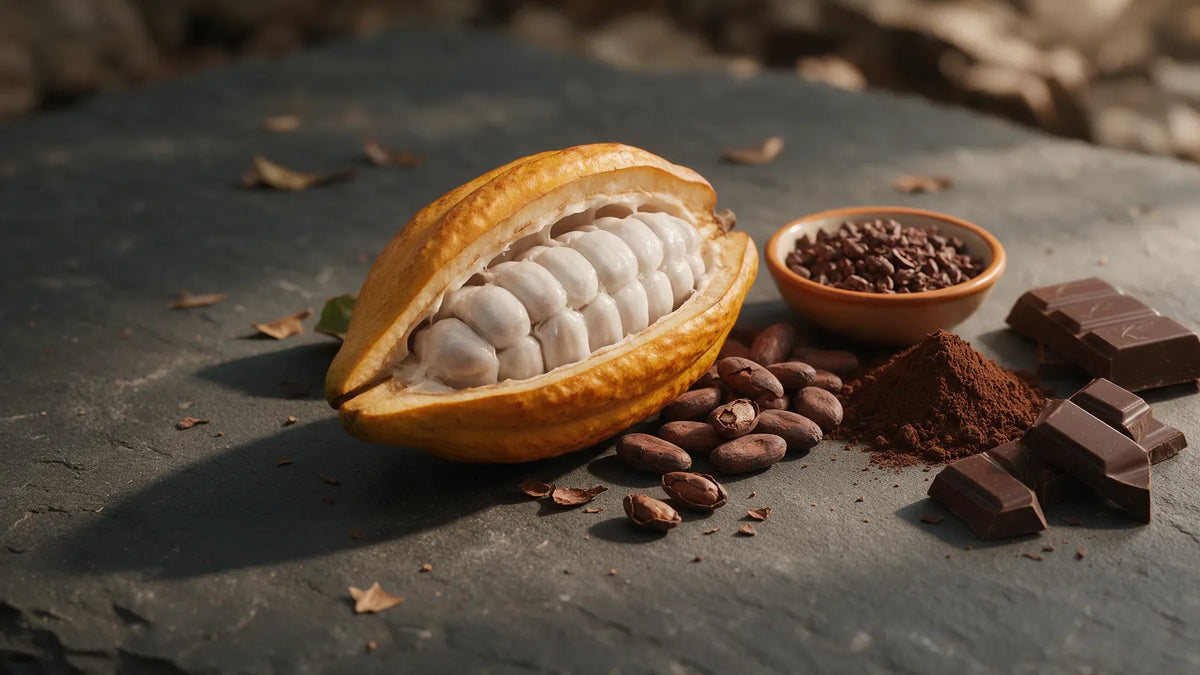
Cacao trees grow in a narrow belt around the equator; the International Cocoa Organization places cocoa-producing countries between 10° north and 10° south. Their fruit, the cacao pod, grows directly from the trunk and the thicker branches. Inside each pod sit several dozen seeds wrapped in a sweet white pulp.
Those seeds become cocoa beans, and then chocolate, through a sequence of steps:
- Fermentation. Seeds and pulp ferment together for several days, which develops the precursors of chocolate flavor.
- Drying. The beans are dried, often in the sun, until they are stable enough to store and ship.
- Roasting. Heat develops the familiar roasted chocolate aroma and loosens the shell.
- Winnowing. The shells are cracked and blown away, leaving the nibs.
- Grinding. The nibs are ground into a thick paste called cocoa mass, roughly half of which is cocoa butter.
Origin and variety shape flavor long before any of this happens. Franceschi chocolates are made with Venezuelan cacao beans and crafted in Peru, and our 60% and 70% use Carenero, a Trinitario variety from the Barlovento region of Miranda State. Our guide to Venezuelan cacao goes deeper into origin, and the art of chocolate making follows the full journey from bean to bar.
Cacao vs cocoa: how the terms are used
| Term | What it usually means | Typical processing |
|---|---|---|
| Cacao tree, cacao pod | The plant Theobroma cacao and its fruit | None |
| Cacao beans, cocoa beans | The seeds; both names are common in trade | Fermented and dried |
| Cacao nibs | Shelled, broken pieces of the bean | Usually roasted, sometimes not |
| Cocoa mass (cocoa liquor) | Ground nibs: cocoa solids suspended in cocoa butter | Roasted and ground |
| Cocoa butter | The natural fat pressed from cocoa mass | Pressed |
| Cacao powder | Powder from unroasted or lightly roasted beans | Pressed and milled, not alkalized |
| Cocoa powder | Powder from roasted beans, natural or Dutch-process | Pressed and milled, sometimes alkalized |
Despite the name, cocoa liquor contains no alcohol. It is simply cocoa mass in its melted, liquid state.
Cacao powder vs cocoa powder
Both powders are made the same basic way. Cocoa mass is pressed to remove part of its cocoa butter, and the remaining press cake is milled into powder. The differences come from the roast and from one optional step, alkalization.
- Cacao powder is usually made from unroasted or gently processed beans and is not alkalized. It is lighter in color, sharp, fruity and acidic.
- Natural cocoa powder comes from roasted beans and is also not alkalized. It is acidic, with a pH of roughly 5 to 6, light reddish brown and bright in flavor.
- Dutch-process (alkalized) cocoa powder is treated with an alkali such as potassium carbonate, which raises the pH toward neutral. It is darker, mellower and disperses more easily in liquids.
In baking, cacao powder behaves like natural cocoa: its acidity reacts with baking soda. Dutch-process cocoa does not supply that acid, so recipes are usually written for one or the other. Our guide to Dutch-process vs natural cocoa explains when a swap works and when it does not.
Fat content is the other variable. US food standards group cocoa by its cacao fat: breakfast cocoa has at least 22%, cocoa, also called medium-fat cocoa, has at least 10% and less than 22%, and low-fat cocoa has less than 10%. Our Cocoa Powder Alkalized 10–12% is a Dutch-process cocoa alkalized with potassium carbonate, with a pH of 6.8 to 7.3 and a deep dark-brown color. It is a product of Peru, milled fine enough that 99% passes through a 200-mesh sieve, so it blends into drinks and batters without lumps.
What are cacao nibs?
Cacao nibs are the bean itself, shelled and cracked into small pieces with nothing added. Most are roasted, which gives them a nutty, deep chocolate aroma; unroasted nibs taste sharper and more astringent. They are crunchy, bitter and unsweetened, because no sugar has been added and none of the cocoa butter has been taken out.
In the kitchen, nibs add texture and a clean cacao flavor. Fold them into cookie dough or granola, scatter them over mousse and ice cream, or steep them in warm cream or milk and strain for a gentle infusion. Our Discovery Kit lists them as Cocoa Nibs, a small reminder that even chocolate makers use both words.
What the percentage on a chocolate bag means
The percentage on a bar or bag of chocolate is the share of the recipe that comes from the cacao bean: cocoa mass plus any added cocoa butter. Everything else is mostly sugar, plus milk in milk chocolate and a small amount of emulsifier such as lecithin.
So a 70% dark chocolate is at least 70% cacao ingredients and up to about 30% sugar and lecithin. A 43% milk chocolate is at least 43% cacao, and the rest is shared between sugar and milk. Ingredients are listed by weight, which is why sugar comes first in our milk chocolate and cocoa mass leads in every darker one.
| Chocolate | Cacao (minimum) | Total fat | Ingredients |
|---|---|---|---|
| Milk Chocolate 43% | 43% | 37% | Sugar, cocoa mass, whole milk, cocoa butter, sunflower lecithin |
| Dark Milk Chocolate 49% | 49% | 37.7% | Cocoa mass, sugar, whole milk, cocoa butter, sunflower lecithin |
| Dark Chocolate 55% | 55% | 35% | Cocoa mass, sugar, cocoa butter, soy lecithin |
| Dark Chocolate 60% | 60% | 35% | Cocoa mass, sugar, cocoa butter, soy lecithin |
| Dark Chocolate 70% | 70% | 41% | Cocoa mass, sugar, cocoa butter, soy lecithin |
The percentage leaves out two things. First, the split between cocoa solids and cocoa butter: two chocolates with the same percentage can differ in fat, which changes how fluid they are when melted. In milk chocolates, total fat also includes milk fat. Second, flavor: origin, fermentation and roast shape taste far more than the number does.
Cacao vs cocoa pronunciation
In American English, cacao is most often pronounced kuh-KOW, rhyming with now, and sometimes kuh-KAY-oh. In Spanish it sounds like kah-KAH-oh. Cocoa is pronounced KOH-koh.
Should you buy cacao or cocoa?
Choose by what the product is, not by which word is printed on the front. Read the ingredient list and the numbers:
- For baking and drinks, decide between natural and Dutch-process cocoa first, then look at fat content.
- For ganache, mousse, molding and enrobing, choose a dark chocolate by its cacao percentage, fat and fluidity.
- For crunch and pure cacao flavor with no sugar, reach for nibs.
Terms like raw cacao describe processing only loosely, so when it matters to you, check how the beans were treated rather than relying on the name.
The quickest way to learn the difference is to taste it. The Discovery Kit holds four products, 4.23 oz (120 g) each, assorted from our chocolates, Cocoa Nibs and Cocoa Powder, so you can compare cacao in several forms before choosing a 2 lb bag.
Frequently asked questions
What is the difference between cacao and cocoa powder?
Cacao powder is usually made from unroasted or lightly roasted beans and is never alkalized, so it tastes sharp, fruity and acidic. Cocoa powder is made from roasted beans and comes in two styles: natural, which is also acidic, and Dutch-process, which is alkalized for a darker color and mellower flavor. All three start as cocoa mass with part of the cocoa butter pressed out.
Can I substitute cacao powder for cocoa powder?
You can swap cacao powder for natural cocoa powder one for one, since both are acidic and react with baking soda. Swapping it for Dutch-process cocoa is less reliable: the extra acidity can change rise, color and flavor in recipes built around baking powder. In drinks, sauces and no-bake desserts any of the three works, though cacao powder tastes brighter and fruitier.
Is cacao or cocoa better for baking?
Neither is better across the board; the recipe decides. Most American baking recipes are written for cocoa powder and say whether they expect natural or Dutch-process. Dutch-process cocoa gives a darker color and smoother chocolate flavor in brownies, cookies and cakes. Cacao powder can stand in for natural cocoa when you want a sharper, fruitier taste.
How do you pronounce cacao?
In American English, cacao is usually said kuh-KOW, rhyming with how, and less often kuh-KAY-oh. In Spanish, the language English borrowed the word from, it sounds closer to kah-KAH-oh. Cocoa, by contrast, is pronounced KOH-koh on both sides of the Atlantic. Any of the three pronunciations of cacao will be understood in a kitchen or a shop.
Why is it called cocoa instead of cacao?
Cocoa is an English alteration of the Spanish word cacao, which came from Nahuatl, the language of the Aztecs. As the word settled into English, the spelling shifted, and cocoa became the everyday name for the powder, the drink and the butter. Cacao stayed in use for the tree and the beans, which is why English now has both words side by side.