Technique · 5 min read ·
Couverture vs Compound Chocolate: Which One Should You Use?
Couverture is real chocolate with a high share of cocoa butter; it needs tempering and rewards you with shine, snap and a clean melt. Compound chocolate replaces cocoa butter with vegetable fat, so it sets without tempering but tastes and melts less cleanly. Choose couverture for flavor, compound for speed and heat tolerance.
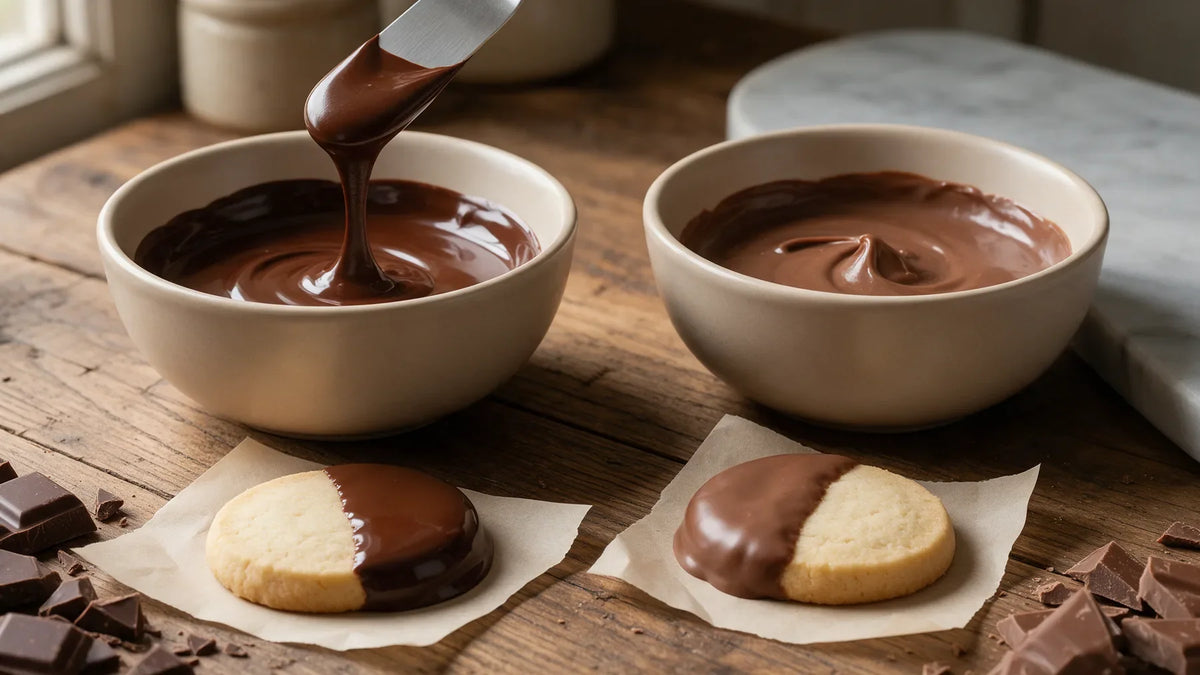
Couverture and compound chocolate look alike in the bag, but they are built on different fats. Couverture is real chocolate rich in cocoa butter: it must be tempered, and it rewards you with gloss, snap and a melt that releases flavor cleanly. Compound chocolate swaps cocoa butter for vegetable fat, so it sets on its own but never tastes or melts quite the same.
What is couverture chocolate?
Couverture (French for "covering") is real chocolate made from cocoa mass, cocoa butter and sugar, plus milk in milk chocolates, with a generous share of cocoa butter. That extra cocoa butter makes it more fluid when melted, which is why chocolatiers and pastry chefs reach for it for dipping, enrobing, molding and fine pastry.
In the United States, "couverture" is a trade term rather than a legal category. In the European Union, couverture must contain at least 35% total dry cocoa solids, including at least 31% cocoa butter. Either way, the defining trait is the same: the fat is cocoa butter, and cocoa butter has to be tempered to set properly.
What is compound chocolate?
Compound chocolate, also sold as candy coating, coating chocolate, confectionery coating or candy melts, replaces most or all of the cocoa butter with other vegetable fats, often palm kernel oil or a hydrogenated vegetable fat. Its chocolate flavor usually comes from cocoa powder rather than cocoa mass.
Those fats set firm at room temperature without tempering: melt, dip and walk away. The trade-off shows up in the mouth. Substitute fats melt less sharply than cocoa butter, so compound can feel waxy or coat the palate, and with less cocoa it tastes sweeter and flatter.
Couverture vs compound chocolate: side by side
| Couverture | Compound chocolate | |
|---|---|---|
| Fat | Cocoa butter, often 31% or more | Vegetable fats such as palm kernel oil, with little or no cocoa butter |
| Tempering | Required for shine and snap | Not needed; melt and use |
| Snap and shine | Crisp snap and high gloss when tempered | Softer bite, moderate shine |
| Flavor | Full cacao flavor from cocoa mass | Sweeter and milder, often from cocoa powder |
| Melt in the mouth | Quick, clean melt just below body temperature | Slower, can feel waxy |
| Handling | Softens in warm rooms and warm hands | Sets fast and tolerates warm rooms better |
| Cost | Higher | Lower |
| Best uses | Bonbons, molded pieces, enrobing, dipped fruit, ganache, mousse, fine pastry | Cake pops, large-batch decorations, warm-weather events, kids' projects, quick drizzles |
Why couverture needs tempering and compound does not
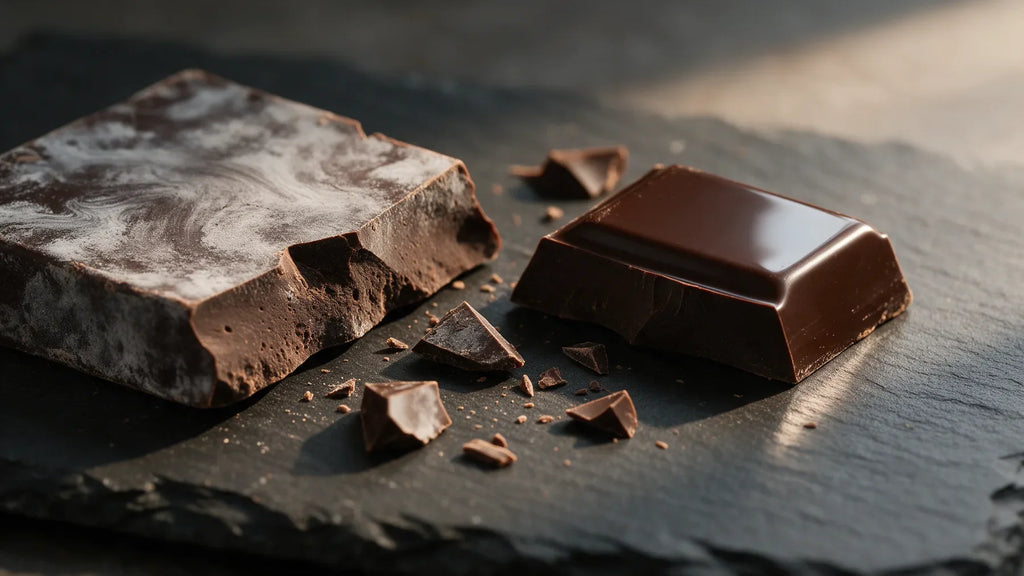
Cocoa butter can crystallize in six forms, numbered I to VI. Only one, form V, gives chocolate its gloss, its snap and its bloom stability, along with a melting point just below body temperature. Tempering is the controlled melting, cooling and rewarming that makes form V crystals dominate. Skip it and couverture sets soft, dull and streaky, and it can bloom within days.
The fats in compound coatings do not have that problem. They set into a stable, usable structure as they cool, which is the whole appeal.
Franceschi dark chocolates follow this curve: melt at 113 to 122 °F (45 to 50 °C), cool to 82 to 84 °F (28 to 29 °C), then work at 88 to 90 °F (31 to 32 °C). Milk Chocolate 43% and Dark Milk Chocolate 49% melt at 104 to 113 °F (40 to 45 °C), cool to 79 to 81 °F (26 to 27 °C) and work at 84 to 86 °F (29 to 30 °C). Our guide to tempering chocolate covers the seeding and tabling methods step by step.
Can you mix couverture and compound chocolate?
Avoid it. Many compound coatings use lauric fats (palm kernel or coconut), which do not crystallize well alongside cocoa butter. Blended, the mix turns soft, sets poorly and blooms easily. Keep separate bowls, spatulas and molds for each.
How to read the label to tell them apart
The ingredient list tells you everything. Look at which fats appear and how high they sit on the list.
- Couverture and other real chocolate list cocoa mass (also called chocolate liquor or cocoa liquor), sugar and cocoa butter, often with lecithin and sometimes vanilla. Milk chocolate adds milk. Franceschi Dark Chocolate 70%, for example, reads: cocoa mass, sugar, cocoa butter, soy lecithin.
- Compound coatings list a vegetable fat near the top: palm kernel oil, hydrogenated palm kernel oil, coconut oil or simply "vegetable fat". Cocoa usually appears as cocoa powder, sometimes "processed with alkali".
- The product name is a clue. In the US, the FDA standard of identity for sweet chocolate (21 CFR 163.123) lists the ingredients the product may contain, and substitute vegetable fats are not among them. A product that replaces cocoa butter with other fats generally cannot be sold simply as "chocolate", so labels use words like "coating", "candy melts", "chocolate flavored" or "chocolatey".
- Front-of-pack promises are another. "No tempering needed" or "easy melt" almost always means compound.
When compound chocolate makes sense
Compound is not a mistake; it is a tool. It is a sensible choice when:
- the event is outdoors or the room is warm, and pieces must survive handling;
- you are coating hundreds of cake pops, pretzels or cookies with limited time or equipment;
- children are helping and tempering is not realistic;
- the coating is a thin decorative drizzle and flavor is secondary;
- the budget is fixed and the chocolate is not the star.
When the chocolate is the flavor people remember, such as a bonbon, a dipped strawberry, a glazed tart or a mousse, couverture is worth the extra step. For volume needs in a shop, café or production kitchen, see our bulk orders page.
Couverture chocolate for dipping and enrobing
For dipping and enrobing, fluidity matters as much as flavor. A more fluid chocolate runs off the piece in a thin, even shell; a thicker one leaves a heavier coat and suits molding and decoration. Our enrobing chocolate page matches each chocolate to the job, and chocolate-covered strawberries are an easy way to practice at home.
| Chocolate | Cacao | Total fat | When melted | Good for |
|---|---|---|---|---|
| Dark Chocolate 55% | 55% min. | 35% | Standard fluidity | Coating fillings, glazes, ganache, mousse, baking, beverages |
| Dark Chocolate 60% | 60% min. | 35% | Thicker texture | Figure and bonbon molding, decoration, glazes, fine pastry |
| Dark Chocolate 70% | 70% min. | 41% | Highest fluidity in the range, thin and even coatings | Molding, decoration, glazes, ganache, tarts and entremets |
| Dark Milk Chocolate 49% | 49% min. | 37.7% | Thicker texture, balanced fluidity | Ganache, mousse, brownies, beverages |
| Milk Chocolate 43% | 43% min. | 37% | Medium fluidity | Ganache, mousse, fillings, molded pieces, beverages |
Dark Chocolate 55% and Dark Chocolate 60% are dark couverture chocolates, and every chocolate in the range lists cocoa butter as its fat, with no palm, coconut or other substitute fats. Fat figures are total fat; in the milk chocolates, part of it comes from the milk. Browse the full dark chocolate collection to compare origins and flavor notes.
Not sure which chocolate fits your work? The Discovery Kit sends four Franceschi products in 4.23 oz (120 g) sachets, so you can melt, temper and dip with each one before choosing a 2 lb bag.
Frequently asked questions
What is couverture chocolate?
Couverture is high-quality real chocolate with a higher proportion of cocoa butter than most eating or baking chocolate. That extra cocoa butter makes it fluid when melted and lets it set with a glossy finish and clean snap once tempered. Chocolatiers and pastry chefs use it for bonbons, enrobing, molding, dipping and fine pastry.
What is compound chocolate made of?
Compound chocolate is made from sugar, cocoa powder and a vegetable fat such as palm kernel or coconut oil that stands in for cocoa butter, often with milk solids and emulsifiers. Because those fats set on their own, compound coatings need no tempering. You will find them sold as candy melts, candy coating or chocolate-flavored coating.
Do you need to temper couverture chocolate?
Yes, if you want it to set at room temperature with shine and snap. Couverture's cocoa butter can crystallize in several forms, and tempering makes the stable one dominate. Untempered couverture still tastes good in ganache, mousse and baking, where it is melted into the recipe, but on its own it sets dull and soft.
Is couverture chocolate good for dipping?
Couverture is the classic choice for dipping because its cocoa butter keeps it fluid, so it coats thinly and evenly. Once tempered, the coating sets crisp and glossy and holds at cool room temperature. A more fluid couverture gives thinner shells on fruit and cookies, while thicker ones suit molding and decoration.
Can you substitute compound chocolate for couverture?
For coating and decorating, often yes, as long as you accept a sweeter flavor, a softer bite and a less clean melt. Do not combine the two in one bowl, since many compound fats are incompatible with cocoa butter. In ganache, mousse or bonbons, where chocolate flavor and texture carry the dish, stay with couverture.
Why is compound chocolate cheaper?
Cocoa butter is one of the most valuable parts of the cacao bean, and compound coatings replace it with less expensive vegetable fats. They also skip tempering, which saves labor and equipment time. The lower price reflects simpler ingredients and handling, and that difference comes through in the flavor and texture of the finished piece.