Origin · 7 min read
Venezuelan Cacao: Criollo, Forastero, Trinitario
Why one country holds so much of the world's cacao genetic diversity — and what that means in the cup.
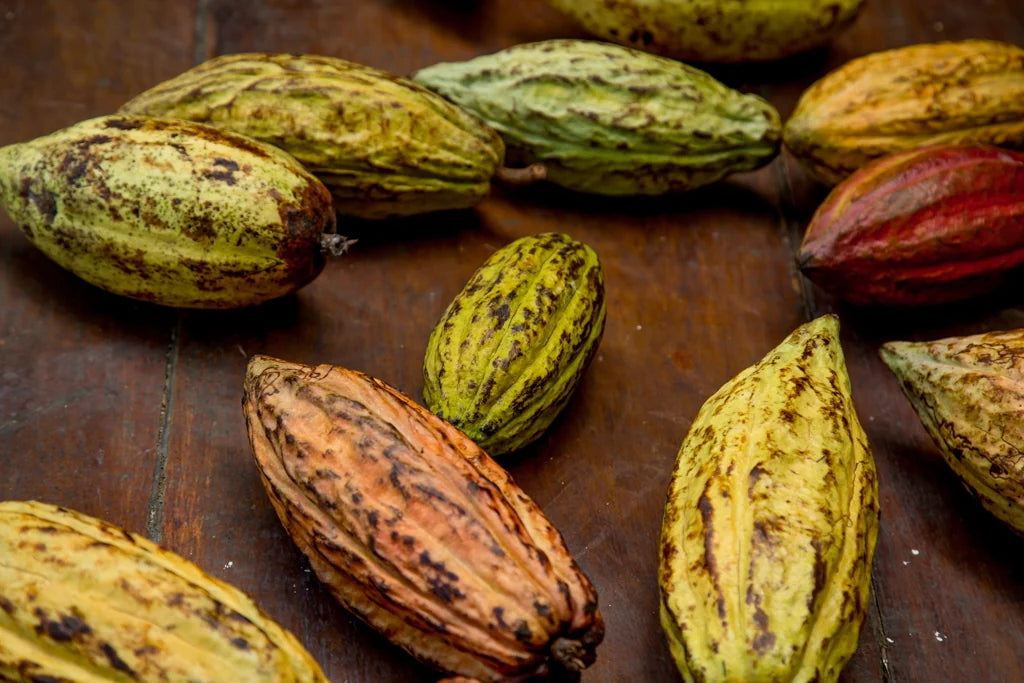
Venezuelan cacao beans are regarded as among the best in the world, with distinctive notes of flowers, almonds, fruits, malt and vanilla. The genetic variability of these beans is considered one of the largest anywhere.
The three main types of cacao
Criollo
The rarest variety, representing approximately 1% of global cocoa production. Celebrated as fine cacao, Criollo is renowned for exceptional aroma and a remarkably balanced flavor, developing extraordinary aromatic complexity and a smooth texture. Venezuela is home to distinguished Criollo strains including Ocumare, Chuao and the legendary Porcelana, populations that originated around Lake Maracaibo and the Perijá Mountain Range.
Forastero
Nearly 85% of global production. Known for vigorous growth and high productivity, it delivers robust, more bitter flavor with lower aromatic intensity, which makes it the foundation of commercial chocolate. A notable exception is Ecuador's Cacao Arriba, celebrated for refined floral aromas. In Venezuela, Lower Amazon Forastero genetics hold cultural significance within Indigenous Ye'kwana and Maquiritare traditions.
Trinitario
Roughly 14% of global production, and the group Franceschi works in. A natural hybrid between Criollo and Forastero, it merges Criollo's elegant aromas and fruit-forward flavors with Forastero's strength and productivity. Natural crossings likely began near Venezuela's Orinoco Delta, where open pollination created diverse regional genetics — which is how celebrated regions like Río Caribe, Carenero and Sur del Lago came to express such distinct profiles.
The genetics of Venezuelan cacao
Venezuelan cacao's diversity stems from Old Criollo and Lower Amazon Forastero genetics, creating flavor expressions unique to each region and making Venezuela a premier origin for exceptional cacao.