Knowledge · 8 min read ·
The Art of Chocolate Making
Roasting, winnowing, grinding, blending, conching, tempering, molding — what each stage actually decides.
Crafting exceptional chocolate is a meticulous process combining science, craftsmanship and expertise. Every stage — from roasting the beans to molding the finished bar — develops flavor, aroma, texture and quality.
Roasting
Roasting uses equipment similar to a coffee roaster. Temperature and duration vary by bean type, origin and density. Beans are sorted beforehand to ensure even heat distribution. The process reduces moisture to approximately 2%, though this varies by chocolate style. Proper roasting develops the complex aromas that define fine chocolate.
Winnowing
Once roasted, the outer shell is removed through friction and airflow. Beans are inspected for aroma, firmness and quality; in fine chocolate workshops nibs are cut open to examine color, structure and texture. Discarded shells are often repurposed as cacao tea.
Grinding
Roasted nibs are ground into cacao liquor, containing cocoa solids and cocoa butter. Premium chocolate is refined to 16–18 microns. At 14 microns two particles rest on a single taste bud, which is what produces extraordinary flavor with a silky mouthfeel.
Blending
Recipes combine cacao liquor and cocoa butter according to the maker's intent. Quality chocolate contains pure cacao, sugar, soy lecithin and natural vanilla; mass-produced varieties include vegetable fats and artificial ingredients. 70% cacao means 70% natural cacao ingredients — the remainder is sugar and other components.
Many manufacturers replace cocoa butter with cheaper vegetable fats and excess sugar.
Conching
Chocolate is continuously mixed at controlled temperature — typically 70 °C (158 °F) — for hours or days. This refines texture while evaporating unwanted acids and volatile compounds, creating smoothness, enhanced aroma and balanced flavor.
Tempering and molding
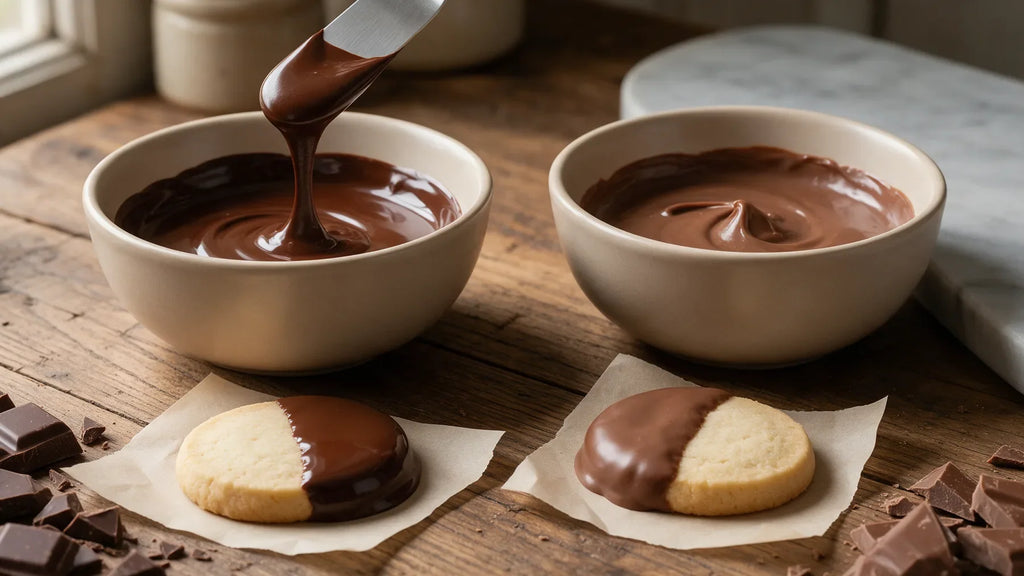
Chocolate is heated to approximately 50 °C (122 °F), cooled to 30 °C (86 °F), then gently reheated to form ideal cocoa butter crystals. Proper tempering produces brilliant shine, a clean snap, stability and smooth texture. Tempered chocolate is then poured into molds to crystallize into its final shape. Only 35% of a fresh cacao pod's weight becomes chocolate — which is a useful way to understand the value of a harvest.
Storage
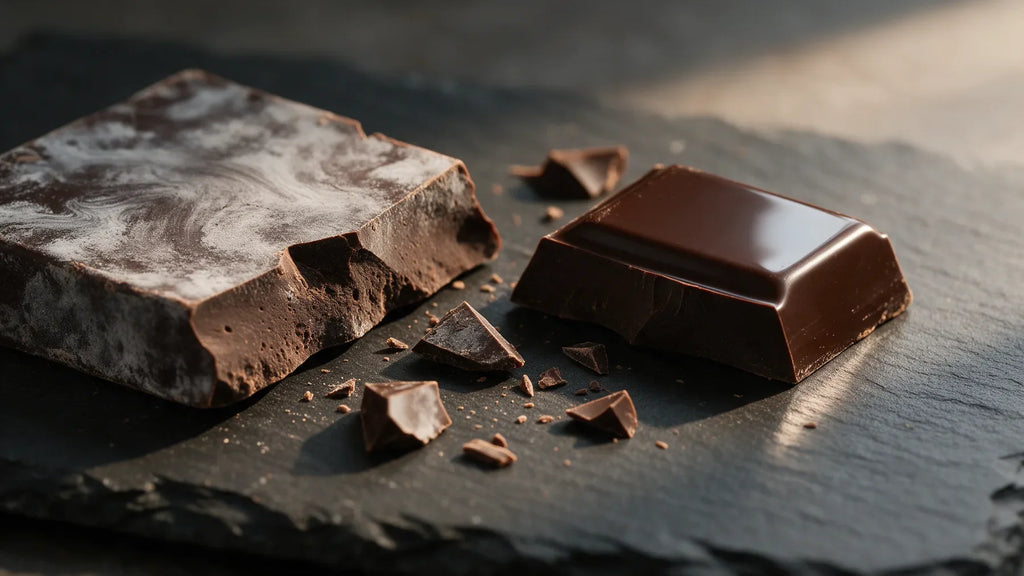
Store chocolate at 12–20 °C (54–68 °F) in cool, dry conditions, protected from light and odors. Filled chocolates require vacuum-sealing and freezing before gradual thawing. Improper storage causes rough texture, bloom, greasy flavors and loss of aroma.