Technique · 6 min read
How to Temper Chocolate
Seeding, tabling or machine — target temperatures, the three methods, and how to read a temper that has gone wrong.
Tempering is how you get chocolate to set hard, snap cleanly and stay glossy. It sounds technical, and the theory is, but the practice comes down to controlling temperature in three stages: melt it, cool it, and bring it back up to working heat.
Target temperatures
- Dark chocolate — melt to 45–50 °C (113–122 °F), cool to 27–28 °C (81–82 °F), work at 31–32 °C (88–90 °F).
- Milk chocolate — melt to 40–45 °C (104–113 °F), cool to 26–27 °C (79–81 °F), work at 29–30 °C (84–86 °F).
Use a digital probe or infrared thermometer. Guessing is the single most common cause of a failed temper.
Three methods
Seeding
The easiest at any scale: melt about two thirds of your chocolate, then stir in the remaining third, unmelted, until it dissolves and the temperature drops into the working range. The added chocolate carries the crystal structure you want.
Tabling
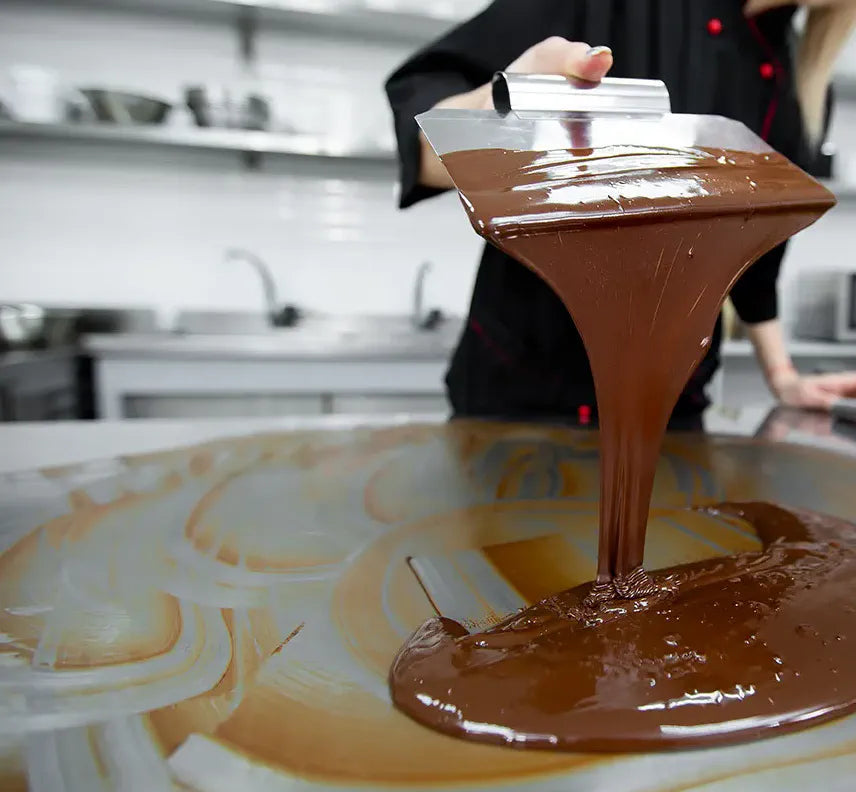
The classic marble-slab method. Pour roughly three quarters of the melted chocolate onto a cool stone surface, work it with a scraper and palette knife until it thickens, then return it to the warm remainder. Fast, tactile and hard on a small kitchen.
Machine tempering
Does the cycle for you and holds the chocolate at working temperature for hours. Worth it once you are tempering daily.
Common faults and how to fix them
- Dull, streaky or pale surface (fat bloom) — the chocolate set out of temper, or was stored too warm. Remelt and temper again; the chocolate is not spoiled.
- Gray, gritty film (sugar bloom) — moisture reached the surface. Remelt and temper; keep chocolate away from humidity and never refrigerate uncovered.
- Thick, grainy mass (seized) — water got in, or it was overheated. Water cannot be undone; overheating can be, by remelting fully and starting the cycle again.
- Slow setting or soft finish — you worked too warm, or the room is too warm. Aim for a room at 18–20 °C (64–68 °F).
A high cocoa butter content makes tempering more forgiving, which is why couverture is the professional choice — and why a little added cacao butter helps thin a temper that has gone too thick.