Storage · 5 min read ·
Chocolate Bloom: Why Chocolate Turns White and Is It Safe to Eat?
Chocolate bloom is the white or gray film that forms when cocoa butter or sugar rises to the surface of chocolate. It is safe to eat. Fat bloom comes from heat swings or a poor temper; sugar bloom comes from moisture. Melting and re-tempering the chocolate restores its shine and snap.
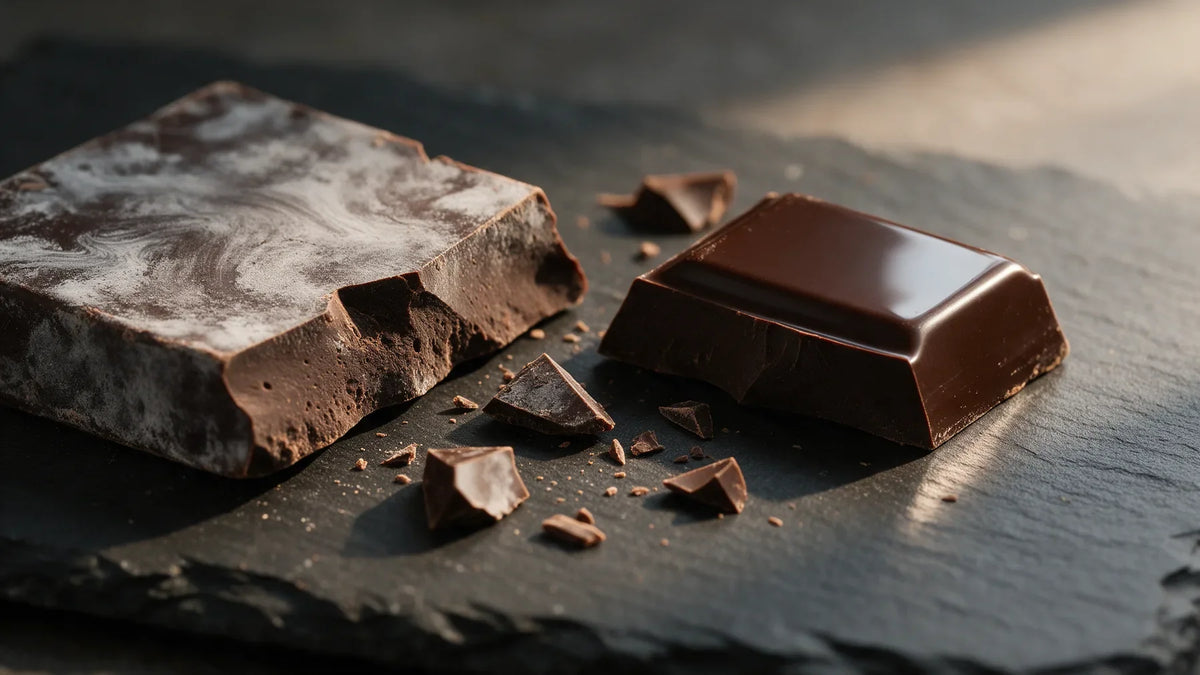
Chocolate bloom is a dull white or gray coating on the surface of chocolate. It forms when fat or sugar moves to the surface and recrystallizes. Bloomed chocolate is safe to eat; it simply looks and feels different. You can bring it back by melting and re-tempering, and you can prevent it with cool, steady, dry storage.
What is chocolate bloom?
Bloom, sometimes called cocoa bloom, is a change in the surface of chocolate, not a sign that it has gone bad. Well-tempered chocolate has a tight, even crystal structure that reflects light, which is why it looks glossy. When that surface is disturbed, light scatters and the chocolate looks pale, streaky or dusty.
There are two kinds, and they have different causes. Fat bloom comes from the cocoa butter. Sugar bloom comes from water. Knowing which one you have tells you what went wrong and how to stop it next time.
Fat bloom vs sugar bloom
| Fat bloom | Sugar bloom | |
|---|---|---|
| Cause | Cocoa butter melts or shifts and recrystallizes at the surface: poor temper, warm storage, temperature swings, oils migrating from fillings | Moisture dissolves sugar at the surface, then evaporates and leaves sugar crystals behind: condensation, humid storage, damp hands or tools |
| Look | Gray or white streaks, swirls or a soft, dull haze | Dry, dusty white film or speckles, often patchy |
| Feel | Smooth, slightly greasy | Dry, rough or gritty |
| Finger test | Melts and smears under a warm fingertip, at least briefly | Stays put; a drop of water dissolves it |
| Fix | Melt and re-temper | Melt and re-temper, or use it in recipes where it is melted |
What causes fat bloom
Cocoa butter can crystallize in six different forms, numbered I to VI, each with a higher melting point than the last. Tempering steers it into form V, the stable crystal that gives chocolate its gloss, its snap and good resistance to bloom, with a melting point just below body temperature. Fat bloom appears when the cocoa butter at the surface ends up in the wrong form.
- Poor or no temper. Chocolate that sets without enough form V crystals settles into unstable forms that soon rearrange into a blotchy, streaky surface.
- Heat and temperature swings. A warm car, a sunny window or a kitchen that heats up every afternoon partly melts the cocoa butter. The liquid fat travels to the surface and recrystallizes as large, dull crystals.
- Time. Over many months, even well-tempered chocolate slowly shifts from form V toward form VI, which is harder and duller. Warm storage speeds that up.
- Fillings. In bonbons and enrobed pieces, softer fats from nut pastes and pralines can migrate into the shell and push cocoa butter to the surface.
What causes sugar bloom
Chocolate sugar bloom is about water. When cold chocolate meets warm, humid air, moisture condenses on its surface and dissolves a little of the sugar. As the water evaporates, the sugar recrystallizes into a fine white layer. The classic trigger is taking chocolate out of the refrigerator and unwrapping it in a warm kitchen. High humidity in storage, or a damp cloth or spoon, can do the same.
White spots on chocolate: how to tell which bloom you have
White spots on chocolate are almost always bloom. Two quick tests and one question tell you which kind.
- The finger test. Rest a warm fingertip on the white area for a few seconds. Fat bloom melts and smudges, and the spot briefly looks darker or shinier. Sugar bloom stays dry and rough.
- The water test. Put a tiny drop of water on the spot. Sugar dissolves and the spot fades; fat does not respond.
- The storage question. Did the chocolate live in the refrigerator? Lean toward sugar bloom. Did it sit somewhere warm, or was it melted and left to set without tempering? Lean toward fat bloom.
Mold on plain chocolate is rare because chocolate holds very little water. A flat, dry film is bloom. If you ever see fuzzy, raised growth, notice a sour or musty smell, or the chocolate was stored with moist foods, throw it out.
Is bloomed chocolate safe to eat?
Yes. The fat and sugar on the surface are the same fat and sugar that were inside the chocolate all along; they have only moved and recrystallized. Nothing has spoiled.
What changes is the eating experience. Fat-bloomed chocolate can feel crumbly or waxy and loses its clean snap. Sugar-bloomed chocolate can feel slightly gritty on the tongue. Flavor usually stays close to the original, although aroma can fade if the chocolate spent a long time somewhere warm. As with any ingredient, check the shelf life printed on the package too.
How to fix bloomed chocolate
Bloom lives in the crystal structure, so melting erases it. Once the chocolate is fully liquid, every crystal is gone and you start fresh.
- Melt it completely to the melting range on its label. For dark chocolate that is typically 113 to 122 °F (45 to 50 °C); for milk and dark milk chocolate, 104 to 113 °F (40 to 45 °C).
- Re-temper it if you want shine and snap back for molding, dipping, decorations or bars. Our guide to tempering chocolate walks through the seeding and tabling methods.
- Skip tempering if the chocolate is headed into a recipe where it melts anyway. Bloomed chocolate is perfectly good in chocolate ganache, mousse, hot chocolate and fudgy brownies.
One caution with sugar bloom: chocolate that absorbed a lot of moisture may melt a little thicker than usual. It still works well in baking and ganache, where small differences disappear.
How to prevent chocolate bloom
Prevention comes down to three things: temper, temperature and humidity. For the full picture on keeping chocolate in top condition, see our chocolate storage and handling guide.
- Store it cool and steady. Franceschi recommends 61 to 64 °F (16 to 18 °C) for its chocolates. Steadiness matters as much as the number: daily swings of a few degrees are what drive fat bloom.
- Keep humidity at or below 70%. Dry air is the best protection against sugar bloom.
- Skip the refrigerator. A fridge is cold and humid, and every trip in and out risks condensation. If you must refrigerate, seal the chocolate airtight and let it reach room temperature for a few hours before opening it.
- Keep it sealed and in the dark. Light and air dull flavor over time, and chocolate absorbs strong odors easily. Reseal the bag after every use.
- Temper properly and set gently. Work within the chocolate's tempering range, then let finished pieces set at cool room temperature, or chill them only briefly, so they do not collect condensation later.
- Rotate your stock. Use the oldest chocolate first and stay within its shelf life.
Why does homemade chocolate turn white?
If chocolate you melted and set at home turns streaky within a day or two, it was almost certainly not tempered, or it fell out of temper while you worked. That is fat bloom, and re-tempering fixes it. If dipped fruit or cookies turn dusty after a night in the refrigerator, that is sugar bloom from condensation. Set tempered pieces at cool room temperature and serve them the same day.
Starting fresh after a bloomed batch? Every Franceschi chocolate comes in a 2 lb (907 g) resealable bag of 4 g pieces that melt evenly and are easy to weigh out as seed for tempering. To try a few before you choose, start with the Discovery Kit.
Frequently asked questions
Is bloomed chocolate safe to eat?
Yes. Bloom is cocoa butter or sugar that has moved to the surface and recrystallized, so nothing has spoiled. The chocolate may taste a little flat, feel crumbly or slightly gritty and lose its snap, but it is safe. Melt it into ganache, brownies or hot chocolate, or re-temper it to bring back its shine.
What is the difference between fat bloom and sugar bloom?
Fat bloom is caused by cocoa butter rising to the surface after heat, temperature swings or a poor temper, and it shows as gray streaks that feel smooth. Sugar bloom is caused by moisture dissolving surface sugar, which dries into a dusty white film. A warm fingertip melts fat bloom but leaves sugar bloom untouched.
Why does chocolate turn white in the fridge?
Refrigerators are cold and humid. When chilled chocolate comes out into warmer air, water condenses on it, dissolves a little sugar and leaves white sugar crystals behind as it dries. That is sugar bloom. Store chocolate in a cool, dry cupboard instead, or keep it airtight and let it warm fully before opening.
Can you fix chocolate bloom?
Yes. Melting removes every crystal, so bloom disappears once the chocolate is fully liquid. Re-temper it if you need a glossy finish and a clean snap for dipping, molding or bars. If it is going into a batter, a filling or a drink, just melt it and use it the way the recipe directs.
Is the white stuff on chocolate mold?
Almost never. Plain chocolate contains too little water for mold to grow easily, so a dry white or gray film is bloom. Mold looks fuzzy or raised and usually comes with a musty smell, most often on chocolate stored near moist foods. If you see fuzz or smell anything off, discard it.
What temperature should chocolate be stored at to prevent bloom?
Keep chocolate cool and, above all, steady, away from light and strong odors, with humidity at or below 70%. Franceschi recommends 61 to 64 °F (16 to 18 °C) for its chocolates. Avoid spots near ovens, windows or exterior walls, where the temperature rises and falls through the day.